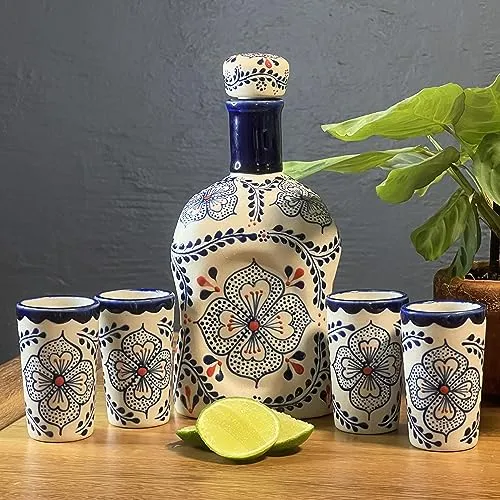
Patience, Allocation, and the Waiting List: A Sober Strategy for Finding Clase Azul on American Shelves
There is a particular ritual familiar to nearly every American tequila enthusiast: the drive to the liquor store, the hopeful glance toward the premium shelf, and the discovery that the space where Clase Azul should stand holds nothing but a price tag and an apology. The decanters are not missing because of poor distribution. They are missing because, in most weeks, there are simply fewer bottles than buyers.
Understanding why — and learning how the system works behind the counter — transforms the hunt from a frustrating lottery into a manageable, even enjoyable, pursuit.
Why the Shelf Is Empty in the First Place
Every Clase Azul decanter is painted by hand in Mexico, and the artisanal process sets the ceiling on output. When demand for Reposado alone surged across the United States over the past decade, production could not scale the way mass-market spirits do. A distillery cannot conjure skilled painters overnight, and the brand has shown little appetite for compromising craftsmanship to chase volume.
The result is a permanent supply-demand imbalance. Distributors receive finite quantities, retailers receive finite allocations, and the consumer sees an empty shelf. This is not marketing theater, though scarcity certainly flatters the brand. It is arithmetic.
How Allocation Actually Works
Premium spirits flow through a three-tier system: the producer sells to a distributor, the distributor sells to a retailer, and the retailer sells to you. Clase Azul allocations are typically tied to a store's sales history. A shop that moves premium tequila consistently will receive more bottles, more often, than a corner store that sells two cases of mixto a month.
For the buyer, this means the single most important relationship in your search is with the retailer who holds the allocation — not with a website or a marketplace listing.
The Waitlist Is Not a Myth
Many reputable shops maintain informal waitlists for allocated bottles. These lists are rarely advertised. Ask a manager directly whether one exists for Clase Azul, and expect a candid answer: you may wait months, and priority often goes to established customers. Buying your everyday bottles from the same shop — vodka, mixers, a case of wine for the holidays — builds the purchase history that moves your name up the list.
This is not corruption; it is how scarce goods have always been distributed in American retail. The regular customer gets the call first.
State-by-State Quirks Worth Knowing
Because alcohol regulation is left to the states, availability varies dramatically by geography.
- Control states such as Virginia, Pennsylvania, and many others route spirits through state-run monopolies. Allocations appear on official state lists, sometimes with lottery or online ordering systems. Monitor the state store's website rather than relying on private retailers.
- Open states like California, Texas, and New York distribute through private retailers, where relationships and waitlists dominate.
- Limited-distribution markets may see certain expressions — Ultra, limited editions — only in select metros, meaning a collector in a smaller market may legitimately need to travel or wait.
Know which system your state uses before you begin. Half the frustration of the search comes from asking a private retailer for a bottle the state itself controls.
Timing the Purchase Window
Distributor shipments tend to follow predictable rhythms. Many retailers receive new stock in the first half of the week, and allocations frequently arrive around major retail moments — the winter holidays, Cinco de Mayo, and Father's Day chief among them. Calling your shop on a Tuesday or Wednesday, shortly after delivery, is meaningfully more productive than a Saturday afternoon visit when the week's bottles are long gone.
Ask your retailer when their distributor typically delivers. Most will tell you. Few customers ever think to ask.
Escaping the Markup Trap
Where scarcity exists, opportunists follow. Secondary listings and gray-market resellers routinely ask two, three, even five times retail for a decanter you could buy at list price with a little patience. A few principles keep you honest and solvent:
- Never pay above the retailer's posted price for a standard expression. Retail pricing is consistent across legitimate shops.
- Treat online marketplaces with suspicion. Counterfeit Clase Azul circulates widely in the US, and the hand-painted bottle is frequently faked with convincing detail.
- Be wary of anyone selling outside the three-tier system. It is not only risky; in many states it is illegal.
If a price feels like a trap, it usually is.
The Long Game
The collectors who eventually hold complete portfolios share one habit: they stopped treating the search as a transaction and started treating it as a relationship. They know their local shop's delivery schedule. They are on the list. They buy other things there. When the truck arrives with six decanters and forty names on the waitlist, their name is near the top.
Scarcity, in the end, rewards patience over urgency. The blue and white bottle is worth the wait — and considerably more enjoyable at the price the system was designed to charge.