Smoke, Butter, and Blue Agave: A Regional Pairing Guide for the American Table
Photo: Shixart1985, CC BY 2.0, via Wikimedia Commons
The instinct when opening a bottle of Clase Azul is to treat it as a destination in itself — poured neat, admired, discussed. That instinct is not wrong. But a decanter of this caliber can also serve as the connective tissue of a well-planned American table, provided the cook and the host understand how cooked agave, oak, and vanilla behave against smoke, butter, and capsaicin.
What follows is a practical framework, built region by region, for pairing the core portfolio with the dishes Americans actually cook and serve.
The Fundamental Logic of Agave and Food
Before the regional tour, three principles bear stating.
First, Reposado is the diplomat. Its few months in oak soften the agave's green edges without masking it, making it the most versatile pour across spicy, charred, and acidic food.
Second, Añejo is the counterpart to richness. Extended barrel aging builds toffee, dark caramel, and dried fruit notes that stand shoulder to shoulder with browned meats, butter, and roasted nuts rather than being flattened by them.
Third, Ultra demands restraint on the plate. With its layered depth and crystal-and-silver presentation, it performs best alongside the simplest possible food — a small pour, a single exceptional bite, and silence.
Texas Brisket and the Case for Reposado
Central Texas brisket is a study in contrast: a blackened bark of salt and pepper giving way to unctuous, rendering-rich meat. A heavily oaked spirit can disappear here; a blanco can be overwhelmed by the smoke.
Reposado threads the needle. Its gentle vanilla and citrus lift cut through the rendered fat, while the preserved agave brightness keeps pace with the char. Serve it slightly cool — around 60°F — in a narrow glass that concentrates the aroma between bites. If your guests lean toward añejo, steer them toward the burnt ends, where the deeper caramel notes meet the crisped, sauced exterior.
Maine Lobster: Where Ultra Earns Its Reputation
A butter-poached Maine lobster roll, served simply on a split bun, is arguably the most revealing food pairing in the American repertoire. There is nowhere for a mediocre spirit to hide.
Sweet, mineral-kissed crustacean and drawn butter respond beautifully to a spirit with saline complexity and a long, quiet finish. This is the moment to decant the Ultra. Pour a single ounce per guest, serve at cellar temperature — roughly 55 to 60°F, never with ice — and let the lobster's sweetness draw out the spirit's honeyed mid-palate. The pairing works because both elements are essentially pure: one ingredient from cold Atlantic water, one distillate from the highlands of Jalisco.
Kansas City and Memphis: Barbecue's Sweeter Register
Where Texas leans on smoke alone, Kansas City's molasses-thick sauces and Memphis's dry-rub-and-drizzle tradition introduce sugar into the equation. Sugar in food demands body in the glass.
Añejo is the correct call. Its oak-driven sweetness harmonizes with sticky rib glaze rather than clashing, and its weight matches the density of pork shoulder. For a backyard gathering, consider offering both Reposado with the pulled pork and Añejo with the ribs — a two-bottle progression that gives the evening an arc.
The Southwest: Chile Heat and the Cooling Pour
New Mexico green chile stew, Arizona carne asada, Tex-Mex enchiladas drenched in chile gravy — the Southwest table is defined by heat. The rule here is counterintuitive: high-proof, heavily oaked spirits amplify burn, while brighter, cooler pours temper it.
Blanco, chilled well, or Reposado served at 55°F will soothe rather than inflame. Avoid Añejo alongside the hottest dishes on the menu; save it for the dessert course, where it belongs beside flan or a dark chocolate tamale.
Holiday Feasts and the Progression Pour
Thanksgiving and Christmas dinners — with their long arc from savory roast to sweet finish — reward a structured approach. Open the Reposado with the bird and the stuffing, move to Añejo alongside the pecan pie, and reserve the Ultra for the fireside hour afterward, served neat with nothing but conversation.
A Note on Temperature and Glassware
Across all regions, three habits separate a considered pour from a careless one:
- Chill the bottle, never the glass with ice. Thirty minutes in the refrigerator brings Reposado to its ideal serving range without dilution.
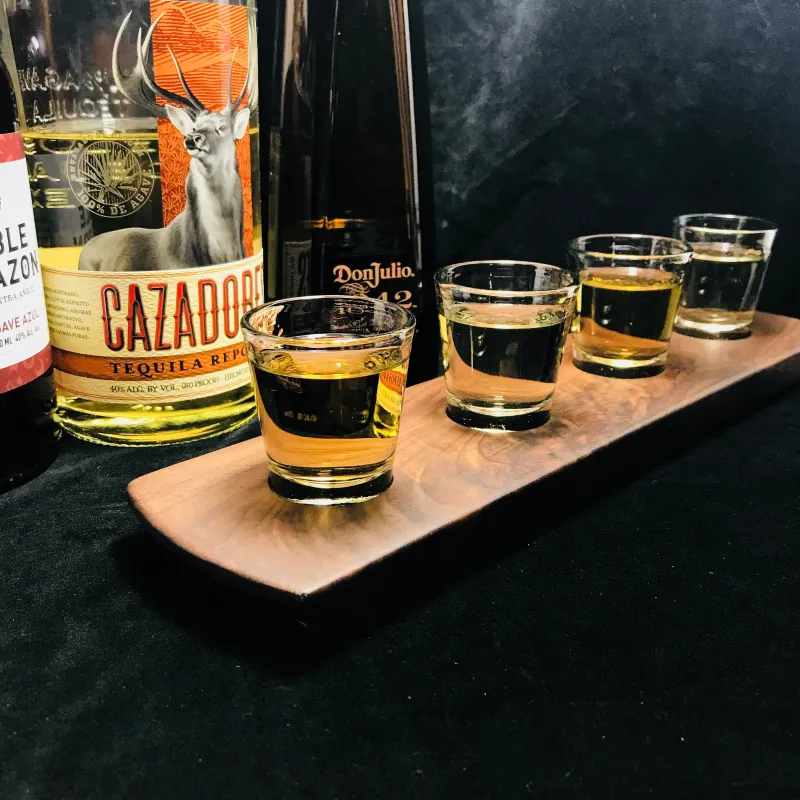
- Use a tulip-shaped glass for aromatic focus; the decanter is a vessel of ceremony, not service.
- Pour small. One to one-and-a-half ounces per pairing keeps the palate fresh and the decanter generous across the evening.
The Deeper Reward
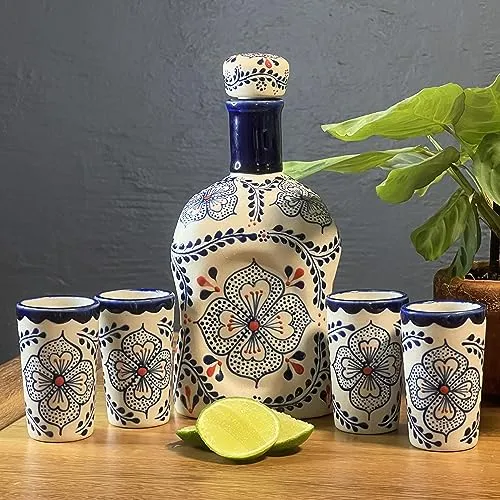
Pairing a hand-painted decanter with brisket or lobster is not a contradiction of luxury — it is its fulfillment. The most memorable bottles are not the ones displayed untouched behind glass, but those that anchor a table, a region's cooking, and an evening's company. Choose the pour with the same care you'd choose the menu, and the decanter on the table will justify itself twice over: once in the glass, and once in the memory.