Seven Lives After the Last Pour: What American Collectors Do With Retired Clase Azul Decanters
Photo: Changku88, CC BY-SA 4.0, via Wikimedia Commons
There is a moment familiar to every Clase Azul owner: the final pour, the empty decanter in hand, and the sudden reluctance to throw away something a craftsman painted by hand. The ceramic vessel, with its cobalt-and-white detailing and its 24-karat gold accents on certain editions, was never designed for the recycling bin. Increasingly, American collectors agree. What follows is a survey of the most compelling second acts these decanters are finding in homes from Austin to the Hamptons.
1. The Curio Cabinet Centerpiece
The most restrained option is also the most popular: dedicated display. Collectors with multiple editions arrange them on glass shelving with integrated LED strips, the low, warm lighting catching the glaze the same way gallery lighting treats ceramics. Because each release features distinct artwork, a row of them reads like a small exhibition of Mexican folk tradition rather than a liquor shelf.
2. Pendant and Table Lamps
Interior designers report steady demand for converting substantial decanters into lamp bases. A drilled base, a threaded rod, and a linen shade later, the bottle becomes ambient lighting for a bar or study. The painted surface diffuses beautifully when backlit, which is why a few enthusiasts skip the shade entirely and run the bottle as a glowing accent lamp.
3. Candle and Incense Vessels
The wide-mouth editions lend themselves to candle conversion. Soy wax poured around a cotton wick transforms the decanter into a slow-burning statement piece; when the candle is spent, the vessel can be refilled. One collector in Denver describes it as "the only candle I own that appreciates the room."
4. Bud Vases and Botanical Stems
Simplicity has its advocates. A single stem of orchid or a dried pampas plume against the blue-and-white ceramic is, according to more than one interior stylist we spoke with, among the easiest high-impact styling moves available. The decanter's silhouette does the work.
5. The Bar Cart Anchor
Even empty, the retired bottle anchors a bar cart's composition. Stylists recommend pairing it with cut-crystal coupes and a lacquered tray, letting the hand-painted detail carry the visual weight while the functional bottles recede into the background.
6. Heirloom Gifting
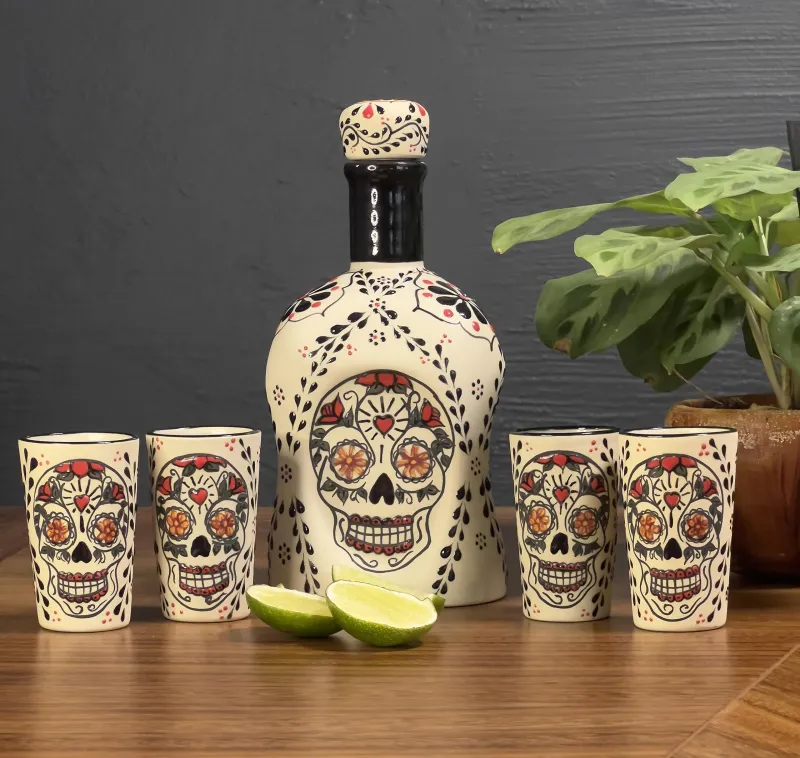
A growing number of families pass emptied limited editions down — a Día de Muertos decanter marked with the year of a wedding or a birth becomes a keepsake. It is, in a sense, the most traditional use of all: Mexican ceramic arts have long carried commemorative meaning, and the bottle simply continues that lineage into an American living room.
7. The Full Display Wall
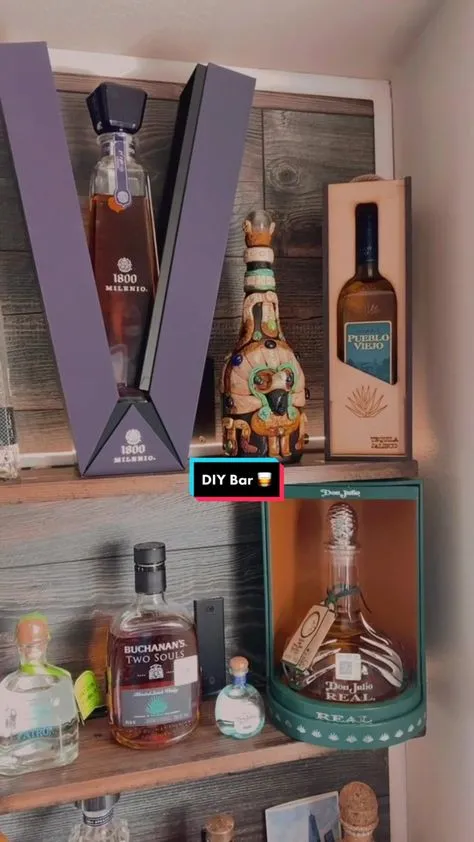
The maximalist end of the spectrum: collectors with deep portfolios mount floating shelves in floor-to-ceiling arrangements, treating the decanters as a single installation. Done well, it reads as tribute. Done carelessly, it reads as inventory. The difference, designers say, is editing — spacing, lighting, and restraint with the surrounding décor.
Why the Vessel Deserves It
Each decanter passes through the hands of artisans in Jalisco who shape, paint, and finish the ceramic individually. No two are identical. That fact is easy to forget while the tequila lasts and impossible to ignore once it doesn't. The afterlife of the bottle — lamp, vase, heirloom, or exhibition — is less a quirky trend than a quiet acknowledgment that the craftsmanship was the point all along.