Sealed for the Anniversary: Why American Couples Are Cellaring Clase Azul for the Day They Say 'I Do'
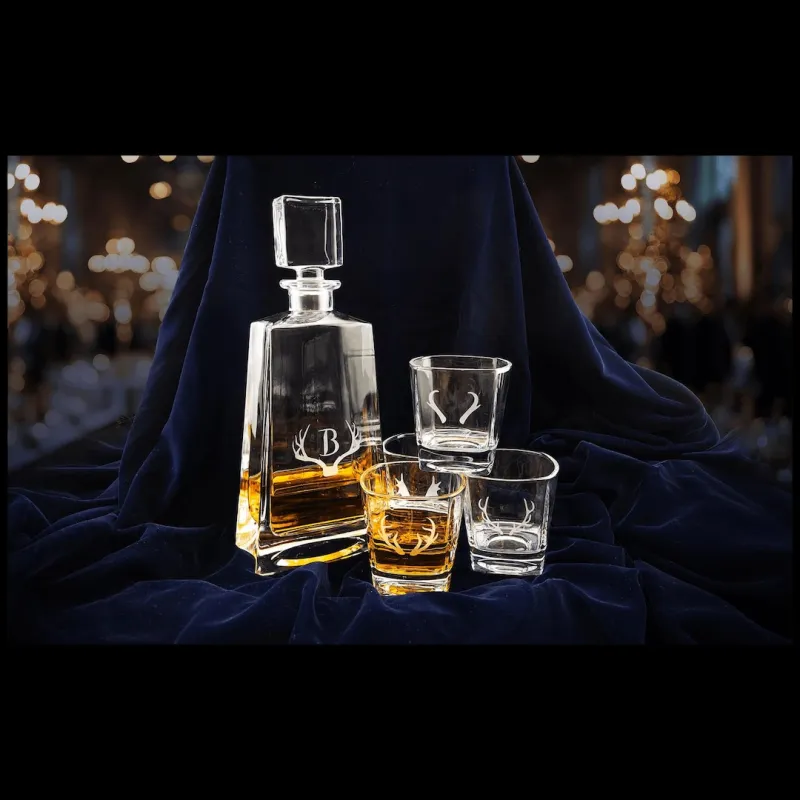
Photo: unopened luxury tequila decanter on wooden shelf with engraved plaque, moody cellar lighting, via i.etsystatic.com
In a wine cellar beneath a Brownstone in Brooklyn's Park Slope neighborhood, a bottle of Clase Azul Reposado waits behind a brass plaque engraved with a single date: June 14, 2019. It was purchased the morning after Elena Vasquez and Marcus Whitfield exchanged vows, and neither of them has touched it since. The plan is simple. On their tenth wedding anniversary, they will carry it upstairs, pour two glasses, and toast a decade neither of them could have predicted.
The Vasquez-Whitfields are not alone. From Napa Valley to Charleston, a distinctly American tradition is forming around the iconic blue-and-white decanter — one that treats the bottle not as a bottle at all, but as a vessel for time itself.
The Ceremony After the Ceremony
Weddings in the United States have long produced keepsakes: cake toppers, preserved bouquets, monogrammed flutes that gather dust. What distinguishes the Clase Azul tradition is that the keepsake improves with the marriage. A high-proof tequila, properly stored, does not degrade the way wine can. The agave character that tastes bright and verdant at year one will taste remarkably similar at year ten.
Couples describe the ritual in strikingly similar language. "We wanted something we'd have to be patient with," says one groom in Austin, whose Reposado will be opened when his daughter — born eight months after the wedding — turns eighteen. "Every time we move, it comes wrapped in a towel like a family member."
There is a symbolic logic at work. The decanter, painted by hand in Jalisco, is already one of a kind. Sealing it with a date, a name, or a promise transforms it from a luxury object into a document — proof that a particular day happened, held in glass and spirit.
Choosing a Bottle Meant to Wait
Not every expression in the portfolio suits a decade-long vigil, and collectors who advise wedding buyers tend to converge on a few principles.
First, favor the core lineup. Reposado and Blanco are the most reliable candidates for long cellaring, with well-documented stability. Ultra-rare releases, however tempting, are often better enjoyed now — their value lies in tasting them, not archiving them.
Second, buy two when the budget allows. One decanter for the toast on the day; one for the shelf. Couples who follow this practice report that the second bottle gains meaning precisely because the first was consumed.
Third, think about the opening date before the purchase date. A bottle intended for a twenty-fifth anniversary should be chosen with the patience of someone buying a suit for a child yet to grow into it.
The Engraving Question
American couples increasingly personalize their decanters, and the market has responded. Engraving specialists in Dallas, Los Angeles, and New York offer deep-etch work on the ceramic itself, typically on the base or the back panel, where the hand-painted motif remains untouched.
The consensus among collectors: engrave sparingly. A date, two names, perhaps a single line. The decanter's artistry is the point; the engraving should read like a footnote in a beautiful book. Brass or silver plaques mounted on a display stand offer an alternative for those unwilling to alter the ceramic at all.
Storing a Promise
A decanter meant to outlast the occasion deserves more than a kitchen counter. The fundamentals are straightforward but worth stating plainly:
- Keep it dark. Ultraviolet light fades the hand-painted glazes and, over years, can dull the spirit itself.
- Keep it cool and steady. A consistent 60 to 70 degrees Fahrenheit, away from radiators and exterior walls, protects both liquid and ceramic.
- Keep it sealed and upright. The cork should stay moist; an unopened bottle stored properly will hold for decades.
- Document it. A card tucked beneath the stand — purchase date, occasion, opening date — turns the bottle into an heirloom with a paper trail.
Some families go further, writing letters to accompany the bottle. A decanter opened at a daughter's wedding, accompanied by a note written at her parents', has become the tradition's most moving permutation.
A Tradition Still Being Painted
It is tempting to be cynical about luxury rituals, but this one resists cynicism. The couple who buys a decanter and refuses to open it is making a small, deliberate bet on their own future — that the marriage, the family, the promise will still be there when the cork finally gives way.
In a country that marks its milestones in a hurry, there is something quietly radical about a celebration scheduled a decade in advance. The blue-and-white bottle on the shelf is not waiting to be drunk. It is waiting to be earned.