Respect the Pour: How America's Best Bartenders Mix With Ultra-Premium Tequila — and When They Refuse To
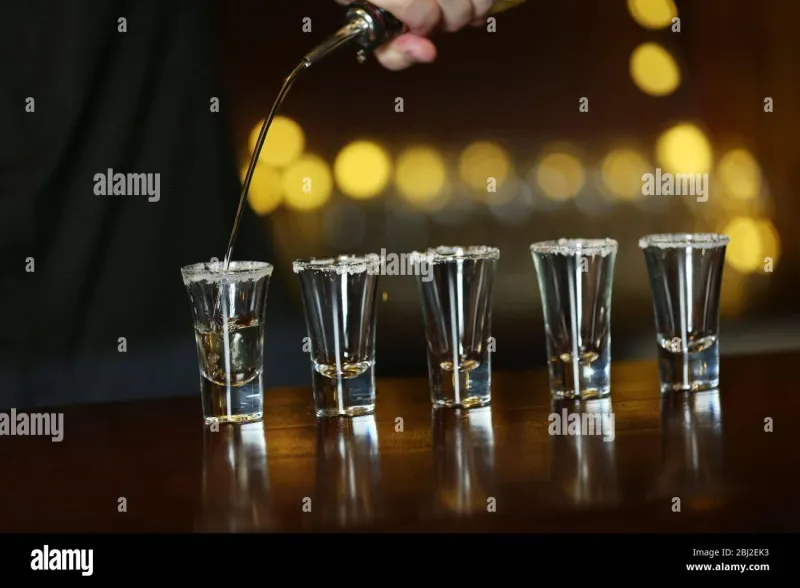
Photo: bartender pouring premium tequila into crystal glass elegant bar, via c8.alamy.com
There is an unspoken code in America's finest cocktail rooms. Behind the back bar, where a hand-painted decanter of Clase Azul might sit under soft lighting like a piece of sculpture, a quiet negotiation happens every night: which bottles are for drinking, and which are for admiring.
For the bartenders we spoke with across New York, Austin, Chicago, and Los Angeles, the question is not whether ultra-premium tequila belongs in a cocktail. It is which expressions earn that privilege — and how to build a drink that honors several hundred dollars of agave, oak, and artisan craftsmanship rather than burying it under citrus and sugar.
The Two-Ingredient Doctrine
Ask Marcus Delgado, head bartender at a Manhattan hotel bar that shall remain unnamed precisely because its list changes quarterly, and he will tell you the answer begins with subtraction.
"When someone orders a pour of Reposado and wants it 'in something,' I don't reach for a shaker," he says. "I reach for the bottle of orange bitters and a bar spoon. That's it. Maybe a flamed orange peel. You're not making a cocktail; you're framing a spirit."
This minimalist school — two ingredients, sometimes three — has become the dominant approach among high-end US bars when a guest specifies an ultra-premium tequila. The logic is straightforward: a decanter aged for months in American and sherry oak carries layers of vanilla, dried fruit, and cooked agave that a margarita's lime-and-triple-sec architecture would flatten rather than elevate.
The agave-forward Old Fashioned riff has become the movement's signature. A generous pour of Reposado, a demerara cube, a dash of Angostura, stirred over one large rock. No juice. No froth. Nothing to hide behind.
Where the Line Is Drawn
Not every bottle earns the same treatment — and some earn none at all.
In Austin, beverage director Elena Ruiz keeps a mental hierarchy that governs her staff's pours. "The Reposado and the Gold? Those can work in a stirred drink on a slow Tuesday. The Mezcal, absolutely — smoke loves a good sour. But the Ultra stays in the cabinet. If a guest wants it, they get it neat, in a proper glass, with a conversation. That's not snobbery. That's what the liquid is asking for."
Ruiz's distinction reflects a broader consensus: expressions defined by extended barrel aging and rare finishing — the ones that command four figures on the secondary market — are treated as sipping spirits, full stop. Mixing them, most bartenders agree, is akin to reducing a first-growth Bordeaux into sangria.
There are exceptions, of course. A celebrated Chicago program once built a tasting flight that concluded with a half-ounce of Ultra alongside a single, unsweetened bite of dark chocolate — a pairing rather than a cocktail, but a reminder that presentation can be as deliberate as the drink itself.
The Home Mixologist's Dilemma
The professional code is increasingly shaping behavior at home, too. American collectors who have spent years assembling a portfolio of hand-painted decanters face a genuine dilemma: a bottle too beautiful to open is a bottle that can never be enjoyed.
The advice from the trade is consistent. Open the workhorse expressions and mix with restraint. Treat the flagship Reposado as a base spirit only in drinks built around dilution, sweetness control, and minimal citrus — think a tequila Old Fashioned, a Paloma made with fresh grapefruit and a whisper of salt, or a simple highball with sparkling mineral water and a expressed lime. Save the Ultra and any limited editions for the rocks glass and nothing else.
"The whole point of a hand-painted bottle is that it's meant to be lived with," Delgado says. "A sealed decanter is a promise you never keep."
Building the Drink Around the Bottle
For those ready to experiment, working bartenders offer a few principles that translate directly to the home bar:
- Stir, don't shake. Shaking aerates and chills aggressively, muting delicate oak and floral notes. Stirring preserves texture and clarity.
- Cut the sugar in half. Ultra-premium tequila brings its own sweetness from cooked agave and barrel time. Recipes built for mixto tequila will overwhelm it.
- Let one modifier lead. Bitters, a fortified wine, or a smoked salt — choose a single accent and let the agave do the talking.
- Weigh the occasion. A Tuesday night pour and a milestone celebration deserve different bottles. Match the expression to the moment, not the other way around.
The Last Word
The American cocktail renaissance taught a generation that great spirits deserve great drinks. The next lesson, now unfolding in the country's most serious bars, is subtler: some spirits deserve great restraint. The hand-painted decanter on your shelf is not a trophy to be guarded into obsolescence, nor an ingredient to be drowned in mixers. It is an invitation — and the best bartenders in the country have learned to accept it with a light hand and a heavy pour of respect.