Behind the Sliding Panel: Where America's Wealthy Really Keep Their Clase Azul
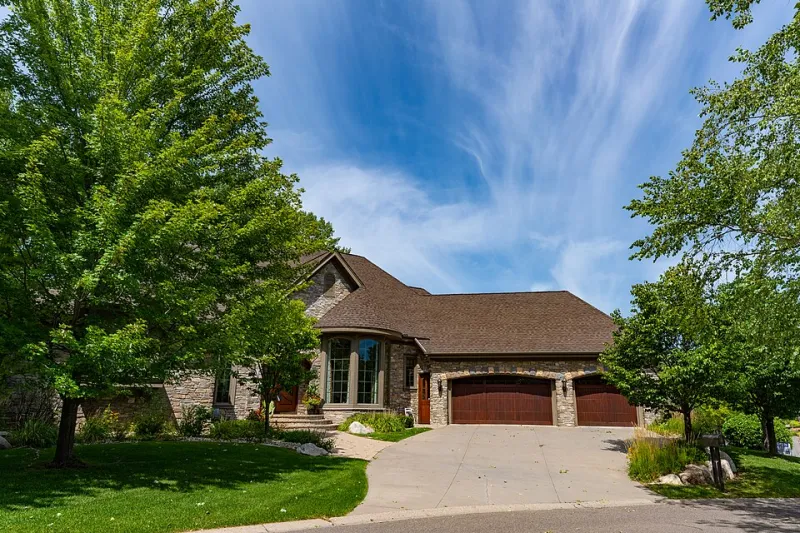
Photo: Tony Webster, CC BY 2.0, via Wikimedia Commons
Ask a luxury home architect in Aspen or Palm Beach about the most requested feature of the past five years, and the answer is rarely a wine wall or a cigar room. It is something more specific: a place to put one bottle.
Not just any bottle. A hand-painted Clase Azul decanter, often accompanied by a small but growing collection behind it, demands a setting commensurate with its presence. The result is an emerging discipline within American residential design — part security engineering, part museum practice, part theater — that reveals a great deal about how this country's most affluent homeowners relate to the objects they treasure.
The Display Vault Comes Home
The most visible expression of the trend is the climate-controlled display vault. Once the exclusive province of commercial wine cellars and watch boutiques, these glass-enclosed chambers now appear in primary residences from Greenwich to Scottsdale. LED lighting tuned to a warm 2700K illuminates each decanter without heating it. Temperature hovers near 65 degrees; humidity is monitored as carefully as in any Napa barrel room.
"Clients used to ask for a cellar that held two thousand bottles," says one cellar designer whose firm serves clients across Texas and Florida. "Now they ask for a cellar that holds two thousand bottles — and a lit alcove for one decanter that cost more than the racking system."
The alcove is not decoration. It is a deliberate act of curation, positioning the blue-and-white silhouette at eye level, usually visible from the great room's primary seating. The decanter functions as an anchor for the entire space, the way a sculpture anchors a gallery.
The Hidden Bar and the Architecture of Discretion
Not every owner wants the collection on view. A parallel movement favors concealment: bars that vanish behind sliding walnut panels, cabinet fronts that look like millwork until a touch latch releases them, speakeasy-style rooms entered through pivoting bookshelves.
Estate managers describe a practical logic beneath the romance. Ultra-premium spirits occupy a narrow window between heirloom and inventory. A decanter displayed in an open living space invites questions, fingerprints, and — in homes with household staff, frequent guests, or teenage children — risks that no insurance policy fully covers.
Thus the rise of the locked cabinet as a fixture of the American luxury home. Some are discreet: a drawer with an electronic keypad inside a traditional sideboard. Others are unabashedly fortified, with laminated glass, proximity sensors, and access logs reviewed monthly. In several households, only two people hold the code — the principal and, sometimes, the estate manager. The butler polishes the glass; the principal unlocks it.
"It's the same instinct as the jewelry safe," one estate manager explains. "Except nobody compliments you on your diamond safe. The decanter is meant to be seen. That tension — show it, protect it — defines the whole design brief."
Staff, Rituals, and the Quiet Etiquette of the Bottle
Interviews with household professionals reveal an unspoken etiquette forming around these bottles. In homes with staff, dusting a displayed decanter is often assigned to a senior member of the team, handled with the same gloves-and-two-hands care as fine porcelain. Opening one requires occasion. Several managers report explicit instructions that no Clase Azul decanter is to be opened without the principal present — a rule that has, more than once, caused a bottle to survive a decade on the shelf unopened.
That survival is the point, and also the paradox. Collectors speak of the decanter as both a consumable and a permanent object, and their homes reflect the contradiction: climate systems installed to preserve a liquid that is, eventually, meant to be poured.
What the Cabinet Says About the Collector
There is a broader reading here. The way affluent Americans house their Clase Azul says something about taste itself. The display vault signals confidence — the collection as public identity. The hidden bar signals discretion — luxury as a private pleasure, shared only with those who earn the reveal.
Both approaches treat the decanter as more than a spirit. It is a design problem, a security question, and a status statement rendered in hand-painted ceramic. And as more American homes are built around what goes inside them, the blue and white bottle has earned a place few objects ever reach: the room may be designed by an architect, but the bottle dictates the floor plan.
For collectors planning a renovation, the counsel from the professionals is consistent: decide where the decanter lives before the drawings begin. The cabinet, the vault, the sliding panel — these are not afterthoughts. In the homes where Clase Azul resides, they are the architecture.